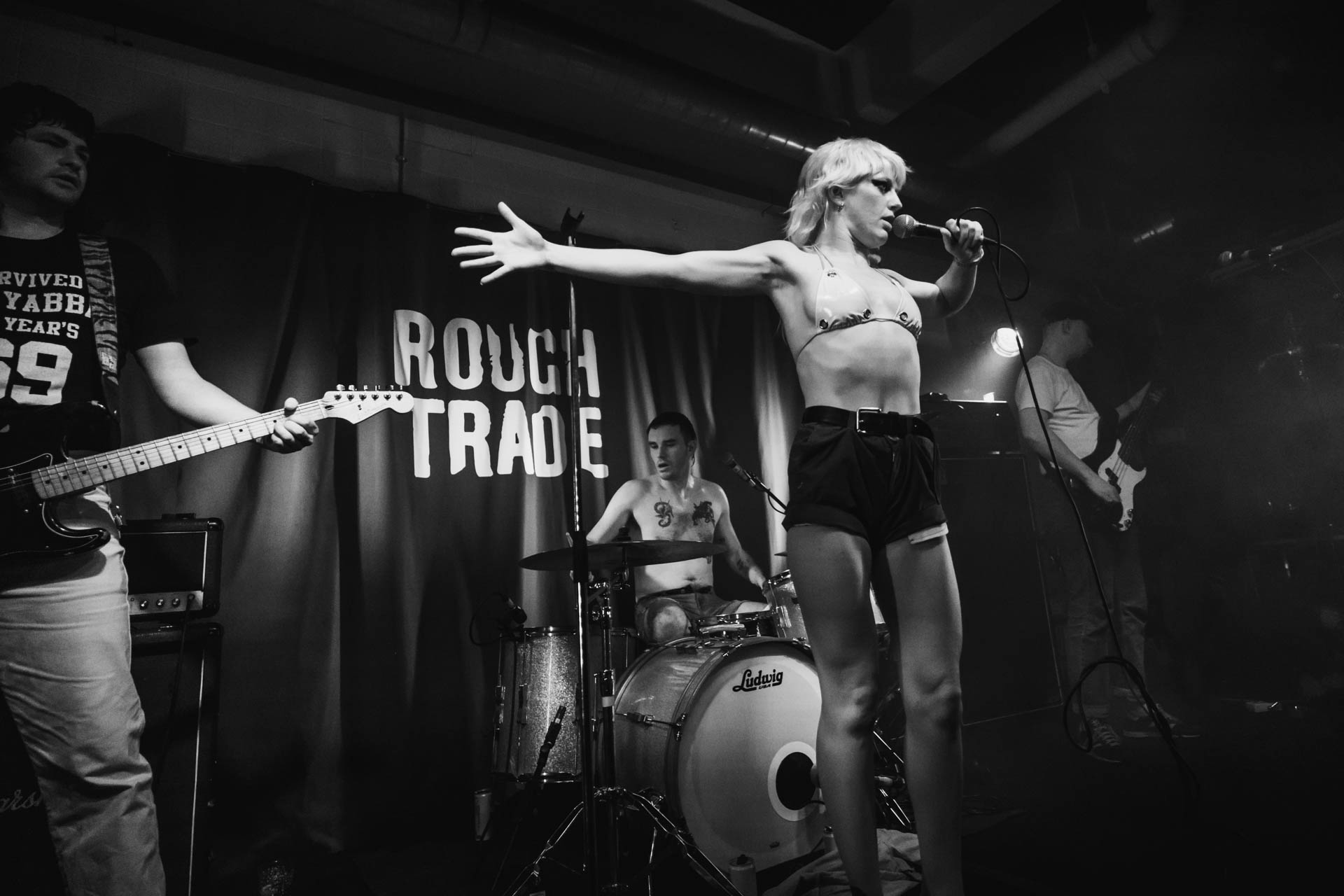
(Cover Image: Paul Hudson / Flickr)
“All I ever wanted was to walk by the park.
All I ever wanted was to walk by the river, see the stars...
Out comes the night, out comes my knifey.
This is how I get home nicely.”
On the track, Knifey, Amyl and the Sniffers frontwoman Amy Taylor grieves her freedom and wellbeing, feeling obliged to carry a knife with her at night in case of harm.
The song symbolises the many ways women and non-binary folx are required to protect themselves; the familiar rules passed down from mothers and circulated amongst friends. Don’t walk alone after dark. Hold your keys as metal claws between your fingers. Share your location with loved ones.
It’s all too ironic, then, that the band’s performances in Meanjin (Brisbane) on January 31 and February 1 would be undermined by numerous experiences of sexual assault within the audience.

Attendee Ameya Jaurigue says she was harassed and touched without her consent repeatedly through the night. She had her skirt removed from her body and her glasses held out of reach above her. When the vigorous crowd movement separated her from her friends, she was left feeling isolated, violated and vulnerable.
Her love for the band’s fierce, progressive messaging made her experience all the more upsetting.
“The music Amy and her band produce, along with their unapologetic, vocal, progressive and accepting messaging and views, have helped empower me over the years.
“Especially as a woman of colour who faces intersectional oppression and systematic issues, I found her music inspiring and her songs made me feel seen.
“The music means something to us,” she says.
Ameya points to the stunning “irony” in the behaviours of perpetrators, who were only emboldened by Taylor’s opening request: don’t touch anyone who doesn’t want to be touched.
She says she felt her “heart drop” when she realised this message would not be heeded, but instead purposely defied by perpetrators.
“Largely due to sexism, they don’t take the advocacy or lyrics of Amyl and the Sniffers seriously and choose to actively ignore lyrics and messaging, inherently undermining all the band stand for,” she says.
“To still act this way shows not only a lack of empathy and cognitive dissonance, but a deeper problem of simply not respecting women and seeing us as people – let alone their equals.”

(Bruce Baker / Flickr)
In addition to her own discomfort, Ameya says she was dismayed to see similar incidents unfolding around her.
“It was an incredibly frightening night and experience for me, however all night I saw other visibly distressed women.
“I knew it wasn’t just me with these experiences, and figured that if it was me this happened to, surely there would be countless other women who experienced the same.”

Ameya’s theory would quickly be proven true.
She harnessed her Instagram account Keeping Brisbane Alive (dedicated to local music and culture) to tell her story, and received an influx of messages sharing similar experiences from the Brisbane shows plus other stops on the band’s national tour route.
Since then, she’s worked with venue The Tivoli to improve safety measures going forward, faced journalists, and even corresponded with the band directly.
* ICYMI: recalling assault (particularly publicly) can be vulnerable and re-traumatising. Accordingly, only 8 per cent of sexual assault cases are reported to police. In supporting Ameya’s advocacy, the author does not criticise others for keeping their experiences private, and acknowledges ongoing systematic failures to achieve justice for victim-survivors.
She says this journey has been rewarding though trying. As a woman of colour, she says the risks of being disbelieved, vilified or receiving backlash were amplified.
“Since coming forward about my experiences to raise awareness and create change, I have simultaneously experienced immense solidarity from community and an incredible amount of horrific misogynistic and racist comments too.
“Many people have victim blamed me, commented on my appearance, accused women of lying for attention or even suggested it was my clothing tempting men and that drunk men cannot control their behaviour.”
After speaking with Taylor, Ameya prompted Amyl and the Sniffers to post a series of stories to their Instagram profile.
It’s not the first time such incidents have occurred at the band’s gigs, their statement reveals.
“This is probably the 6th or so time I’ve had to write something like this about assault specifically, so I’m at the end of my tether,” it reads.
Indeed, a brief search finds near-identical stories of violation and disrespect – even on the other side of the world. A writer for English university paper The Gryphon said she found the moshpits to be “nothing more than great exertions of masculinity” during a 2022 gig in Leeds, leaving with a “collection of bruises” from the violent physicality.
“This is a worldwide problem because sadly music is not sanctuary from society its a microcosm of it [sic],” Amyl and the Sniffers say.
“Feminist politics are at the forefront of our shows and music.”


The punk music scene may be known for its bold, progressive nature, but it is not immune to sexism, racism and other forms of marginalisation that exist in our world.
Punk offers its community freedom through the transgression of social norms and the associated emotional release – but this can just as easily implode. The moshpit itself signals a uniquely volatile site where irresponsible behaviour can quickly undermine the pleasure of dancing, moving and engaging with performers, one study found.
Freya Langley has spent three years exploring women and gender diverse people’s participation in Australian music as she authors her doctoral thesis.
She says physical and sexual violence can infiltrate the scene as a means for perpetrators to claim power over the space, reinforcing patriarchal hierarchies and sexual entitlement.
“It’s interesting that these kind-of self-proclaimed alternative spaces are still often really hostile, unsafe and unequal places for women and gender diverse people.”
“Violence says, ‘you shouldn’t be here’ – it works to kind of draw that boundary of inclusion and exclusion.“
“Among other motives, it’s designed to make you leave, or feel that you don’t belong in that space or don’t have a right to be there,” she says.
The Raising Our Voices report clarifies the extent of sexual harm and discrimination within the industry itself. Released in 2022, it found more than 50 per cent of respondents (including artists, managers, crews and other staff) had experienced some form of sexual harassment. Amongst women, this figure rose to 72 per cent, and an even greater 85 per cent amongst those identifying with a non-binary gender.
A First Nations woman surveyed said coming forward about harassment would harm her career.
“We feel we can’t say anything [because] we will be ostracised in the industry,” she said.

These patterns have a ripple effect on audiences. Freya says a glance around an entertainment venue shows white men continue to dominate audiences – followed by white women and trailed significantly by women of colour.
“We have to ask ourselves why that’s the case,” she says.
“What are we doing to invite different groups of people into the space?”
She says diversifying a lineup attracts a more diverse crowd, but further steps are needed to ensure the safety of vulnerable groups. The implementation of “crowd care teams” is an emerging technique to enhance patron wellbeing, especially when traditional security may not be equipped to monitor and address sexual harassment.
“[Crowd care teams] wear safety vests or hats so they are identifiable, and just roam the event,” she says.
“They’re there so that you can approach them if you’re feeling uncomfortable or unsafe, but also to keep an eye on things if they see anything shady.”
On the individual level, Freya adds that bystander intervention and “being prepared to say something” goes a long way in supporting victims. She says making live music more welcoming and accessible through such procedural and behavioural changes will cultivate a “much more interesting music scene”.
“These spaces are real drivers of social change…there’s real potential there for these changes to be made,” she says.

Not only an avid music fan, Ameya’s seven years of experience in policy bring her a unique perspective on the sexism and racism she experienced during the event and in its aftermath.
She says it was “incredibly saddening” to experience assault and misogyny firsthand, despite having seen and been part of advocates’ vast efforts to redress cultural and systemic sexism.
“It felt even more upsetting and wrong that I was experiencing what so many other women have, and what is so often dismissed or treated as just a statistic and story in passing on paper in reports.”
2024 marked a confronting year for the state of gender equality in the country. Sherele Moody’s Femicide Watch reported 101 women lost to violence during the year, and 11 in 2025 at the time of writing. Beyond the numbers are the unimaginably colourful and complex lives of these women, and the loved ones they touched.
Ameya says there is no better time to make change – be that assisting female friends at gigs, being a proactive bystander, or raising your voice against broader misogyny.
“I shouldn’t have been in this position in the first place and nor should any woman. We deserve safety and we need to collectively make noise and demand change,” she says.
“Women deserve to live without fear.”


Leave a Reply