Modern sport can be grim. There seems to be an endless supply of doping scandals, unshakeable grudges and brazen fans across major leagues. Yet, pickleball is a breath of fresh air in the sporting smog. Dominated by amateurs and casual players, its charming, down-to-earth spirit is unmistakable at local tournaments and clubs around the country. It’s a matter of retaining this atmosphere as the game inevitably matures, evolves and — grows up.
Don’t know your pickleball from your pole vault? It’s a mix of tennis, badminton and table tennis – plus a little chess. Players use a paddle to hit a perforated, plastic ball over the net, strategically selecting shots to outplay their opponents. Honesty is the policy: it’s even common to override a favourable umpiring decision to ensure the correct call. A sense of camaraderie pervades off court; players share knowledge and even host visiting teams from interstate or abroad.
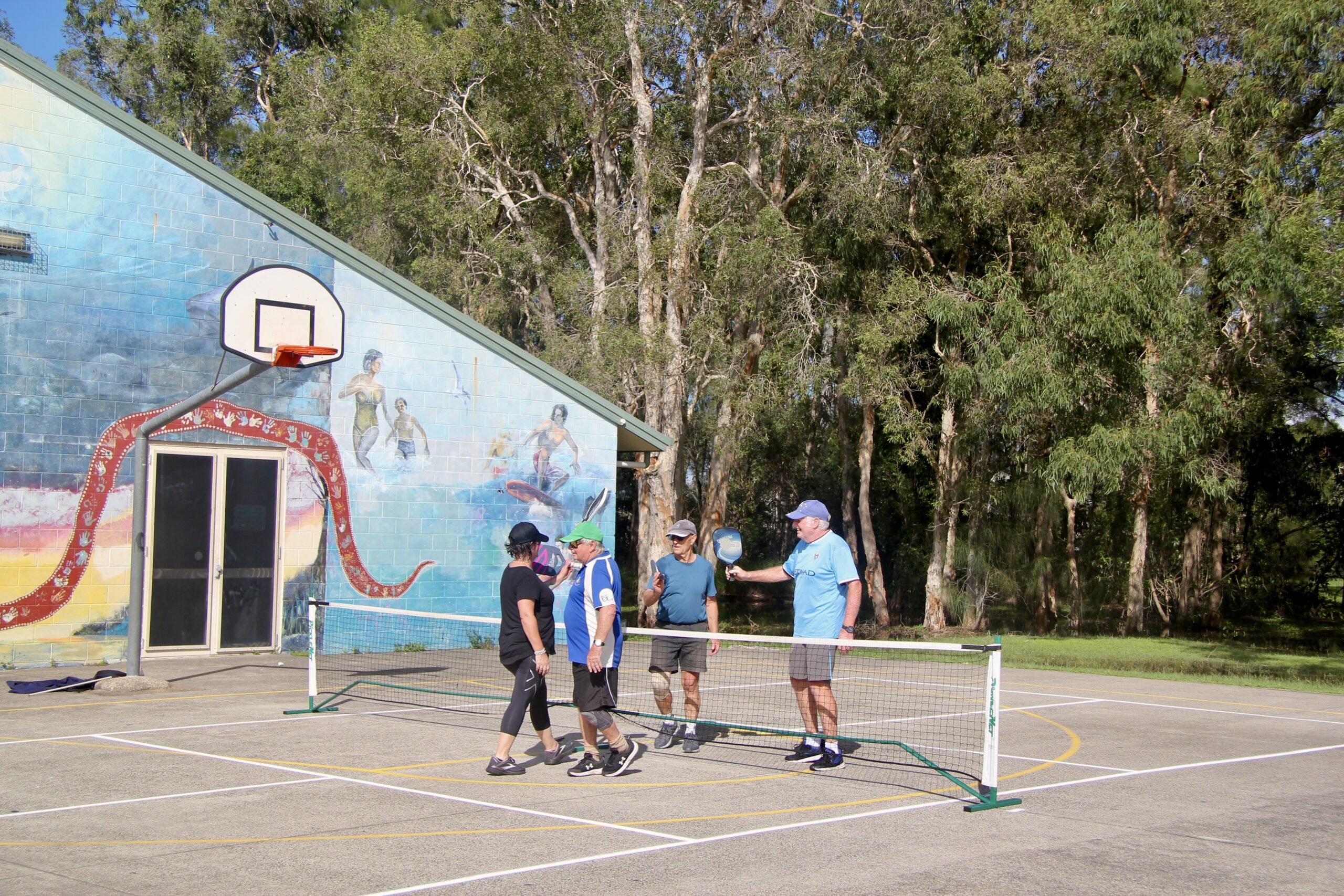
The Bribie Pickleball Club epitomises the community-oriented nature of the sport, and couldn’t be further from the drama of professional sport. Games take place at the Lions Community Centre, with thick gum trees and a faded, oceanic mural painting a fitting backdrop. On a sunny March morning, players share hot cross buns with lashings of butter.

Former club president Harry Fielding says the Bribie club emerged from his backyard after he and wife, Adele, learned the game in the United States. As they gained the interest of friends and neighbours, they advanced to makeshift courts created with chalk, or sometimes laid down tape on derelict netball courts.
With a burgeoning membership, the club has rallied behind a proposed upgrade to local recreation hub, Cosmos Park. It would see the Moreton Bay Regional Council build the island’s first dedicated pickleball courts, creating a permanent and reliable playing spot for the club. “They’re realising it won’t fizzle and go away,” Adele says.
45 per cent of Bribie Island’s population is comprised of people aged above 65 – a figure that far exceeds the national ratio of 16 per cent, according to the ABS. Pickleball makes a fantastic leisure activity for this demographic, and not only thanks to its physical benefits. Studies have found a strong correlation between participation in pickleball and social wellbeing, including improved life satisfaction during the ageing process. On Bribie Island, the club complements its frequent playing sessions with trivia nights and fundraising dinners to enrich its community.
Meanwhile, National Pickleball League player Ashlee Graham reflects a new generation of players entering the game. Raised with two brothers by athletic and aspirational parents, her childhood excellence in tennis came as no surprise. Ashlee had her ducks in a row by the age of 16: an international championship to attend, and a U.S. college scholarship on the cards.
But, like many tennis stars, her talent came with tears and tantrums included. Her bubbly temperament today makes it difficult to envision what she describes as her many on-court “swearing matches”. Pickleball has been a light-hearted (and less obscene) way for Ashlee, now 20, to let her competitive spirit play.
Ashlee describes the positive culture which allows her teammates and rivals to embrace competition while keeping fun the focus. “We play them and it’s very aggressive, and then I turn around and they’re hugging and having a glass of wine after,” she says.

With 10,000 players across the country and budding national leagues offering $700,000 prizes, pickleball is on the rise like a teenage growth spurt. It is beginning to be taught in schools and even has prospects to become an Olympic sport.
Pickleball Association of Queensland Adrian Gray says these factors are “ticking away in the background” and will add greater voltage to the surge. “You’ve got to be mindful going forwards with your planning, because when it unfolds it’s going to unfold very quickly.”
It can be difficult to envision a professional sport that preserves the fun, light-heartedness of pickleball. The high stakes and tough competition appear incongruous with its friendly sideline chatter and social nature. Yet, it’s just these traits that Adrian strives to protect.
The thorough planning of “future-proof” facilities could circumvent tensions as competition increases, he says. His focus is on enabling play at all levels – be it social, competitive or anything in between – and supporting all genders, ages and abilities to get involved in pickleball.
Adrian suggests the community itself may be a self-fulfilling prophecy in the quest to save spirit and sportsmanship. For now, its community orientation still triumphs, and he’s confident this will endure.
“There’s still a give back mentality, there’s still recognition of players that are needing help to grow and therefore they help other people to come up,” he says. “Good nature rubs off on people.”
Leave a Reply